The United Kingdom may no longer be part of the European Union, but its economic data continues to carry significant weight in global forex markets. As one of the world’s largest financial hubs, London plays a central role in international currency flows, and key reports from the UK often ripple far beyond its borders. For traders across the globe, understanding how UK economic indicators influence both sterling and other major currencies is essential for capitalizing on volatility and anticipating shifts in global sentiment.
Why UK Data Matters in Forex Markets
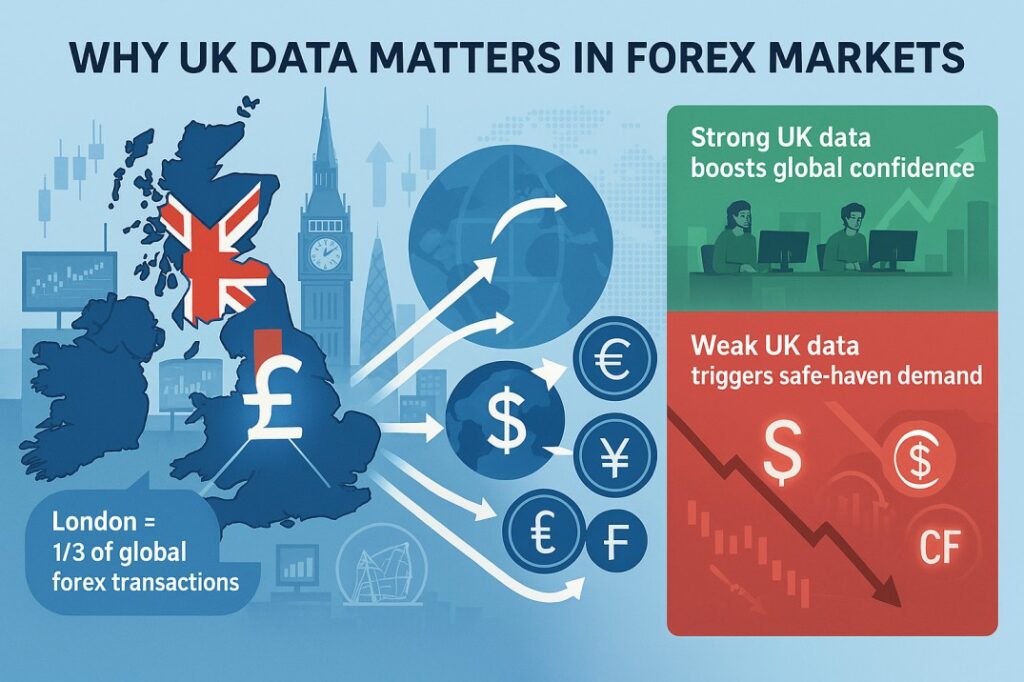
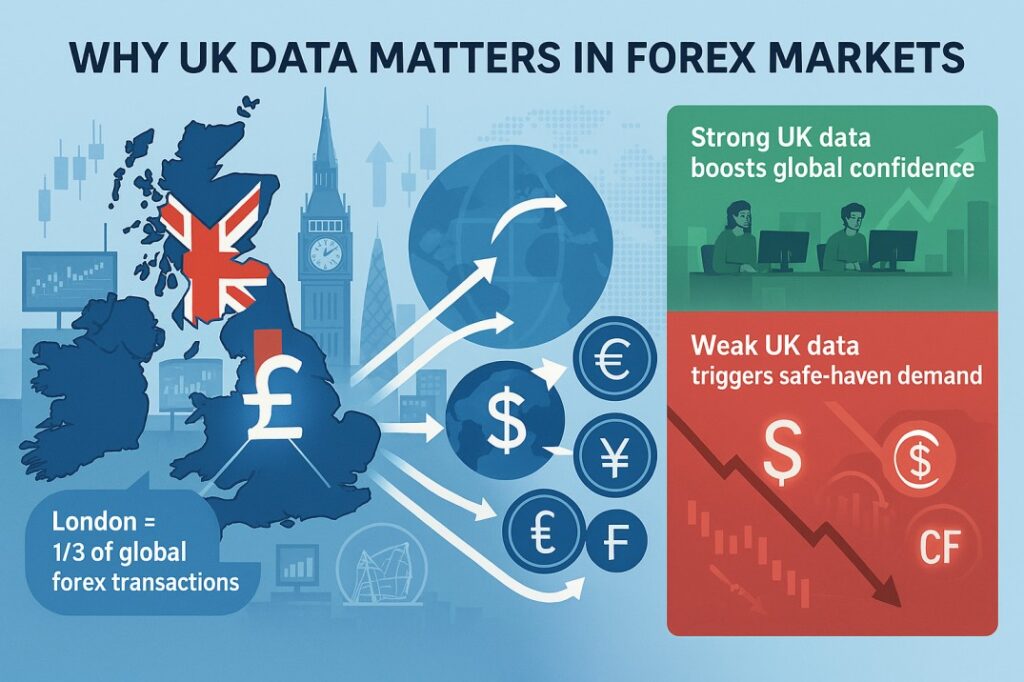
The UK is the sixth-largest economy in the world and the second-largest in Europe. London alone accounts for more than one-third of all forex transactions globally, giving the British pound (GBP) an outsized influence relative to the size of the domestic economy. As a result, traders closely track UK economic releases not only for GBP/USD or EUR/GBP opportunities but also for their broader implications across cross-currency pairs.
UK economic data is particularly impactful because it often serves as a barometer of global risk appetite. Strong growth and resilient indicators tend to boost confidence in global financial stability, while weaker readings may trigger safe-haven demand for the US dollar, Japanese yen, or Swiss franc.
The Most Market-Moving UK Reports
Several economic indicators from the UK consistently generate strong reactions in forex markets:
- Gross Domestic Product (GDP): GDP growth data reflects the health of the economy. Surprises here often trigger significant volatility in GBP pairs and can influence global equities and bond yields.
- Consumer Price Index (CPI): Inflation remains a key driver for Bank of England (BoE) policy decisions. Hotter-than-expected CPI numbers raise the likelihood of rate hikes, usually boosting the pound, while softer figures can weaken it.
- Employment Data: Reports on wages, unemployment, and job growth give traders insight into labor market strength and consumer spending potential. A tight labor market typically pressures the BoE toward policy tightening.
- Monetary Policy Announcements: Beyond the numbers, the tone of the Bank of England’s forward guidance significantly impacts currency moves. Hawkish surprises can trigger sharp GBP rallies, while dovish commentary may spark sell-offs.
- Retail Sales: As the UK economy is consumption-driven, strong or weak retail sales reports quickly shape expectations for growth momentum.
Global Ripple Effects
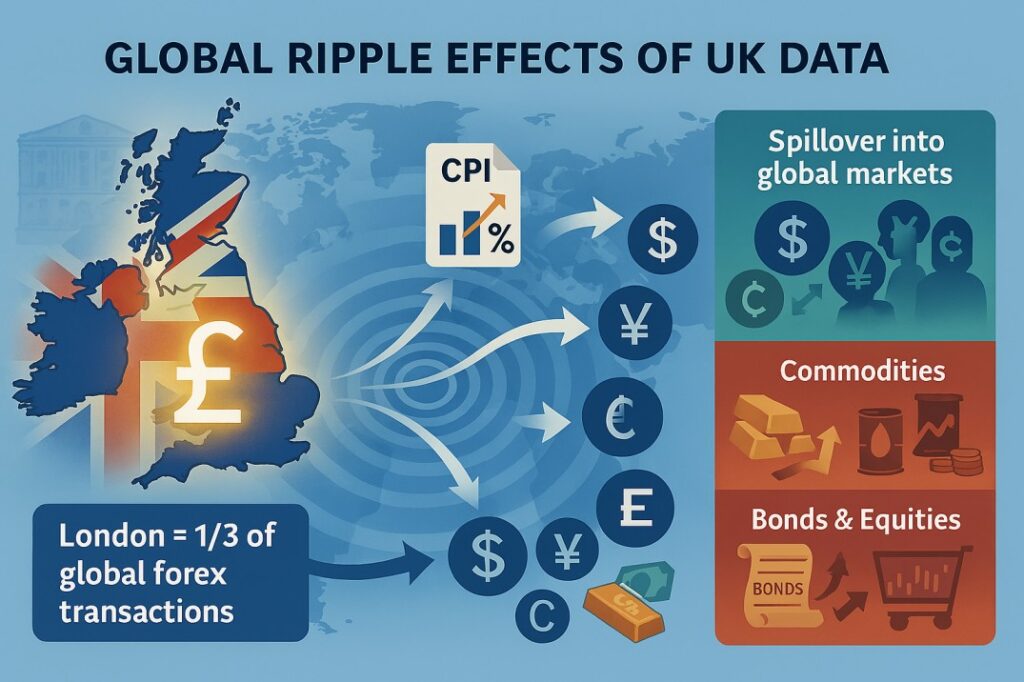
The impact of UK data isn’t confined to sterling alone. For example, stronger-than-expected UK inflation could spark speculation of tighter monetary policy across other central banks, influencing the euro, US dollar, and even emerging market currencies.
Additionally, due to London’s dominance in the global financial system, liquidity shifts driven by UK data often spill over into commodity markets, US Treasuries, and equities. This interconnectedness makes UK reports valuable for traders worldwide, even those who don’t actively trade GBP.
Brexit’s Continued Influence
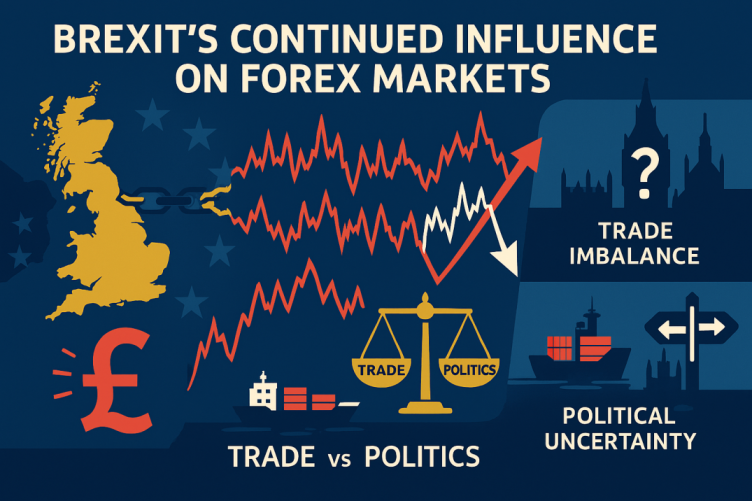
Though several years have passed since the UK left the EU, Brexit-related issues continue to play into market reactions. Trade imbalances, political uncertainty, and regulatory divergence can amplify volatility around economic releases. For forex traders, this means factoring in not just the data itself but also the broader political backdrop.
Trading Strategies Around UK Data
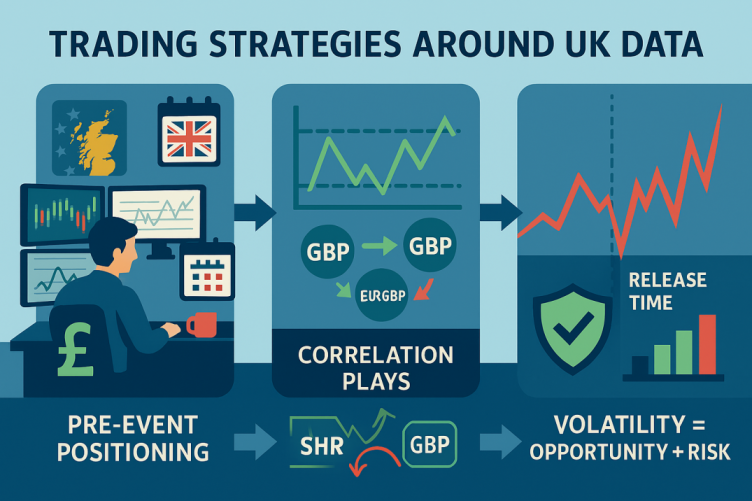
- Pre-Event Positioning: Many traders avoid taking large positions before high-impact data, as surprise outcomes can lead to sharp whipsaws. Instead, they prepare key support and resistance levels for rapid entries once the data is released.
- Correlation Plays: Since UK data often affects global currencies, traders may look at correlated pairs such as EUR/GBP, GBP/JPY, or even GBP/AUD for opportunities.
- Risk Management: Spreads can widen during major UK releases, so traders must adjust stop-loss and take-profit levels to account for higher volatility.
Conclusion
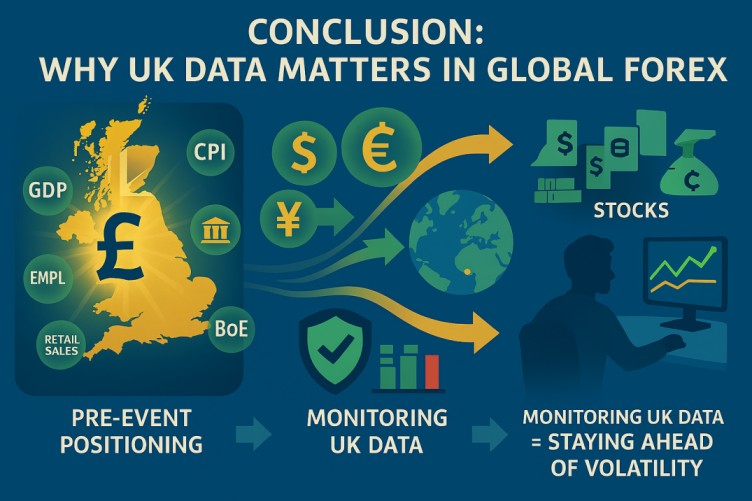
UK economic data remains a crucial driver of global forex movements. From GDP and inflation reports to Bank of England guidance, these releases influence not just sterling but also broader risk sentiment across asset classes. For traders seeking to navigate global currency markets, monitoring UK data is an essential part of staying ahead of volatility.