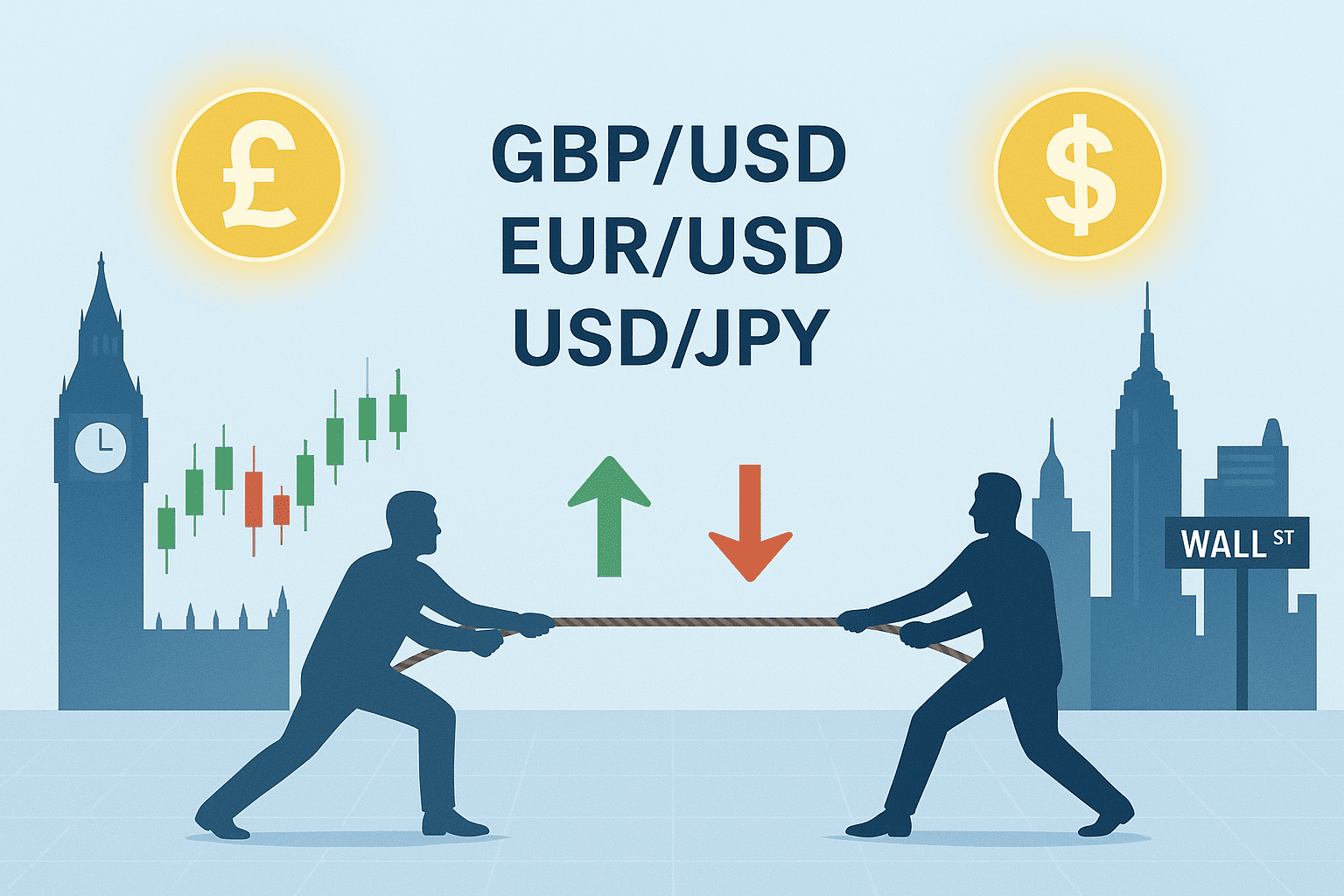
When it comes to global forex trading, few regions hold as much weight as the United States and the United Kingdom. Both economies play crucial roles in shaping currency flows, interest rate expectations, and market sentiment. For traders focused on major pairs like GBP/USD, EUR/USD, or even USD/JPY, understanding how the UK and US markets influence forex can provide an edge in anticipating volatility and making better trading decisions.
Why the US Market Still Dominates
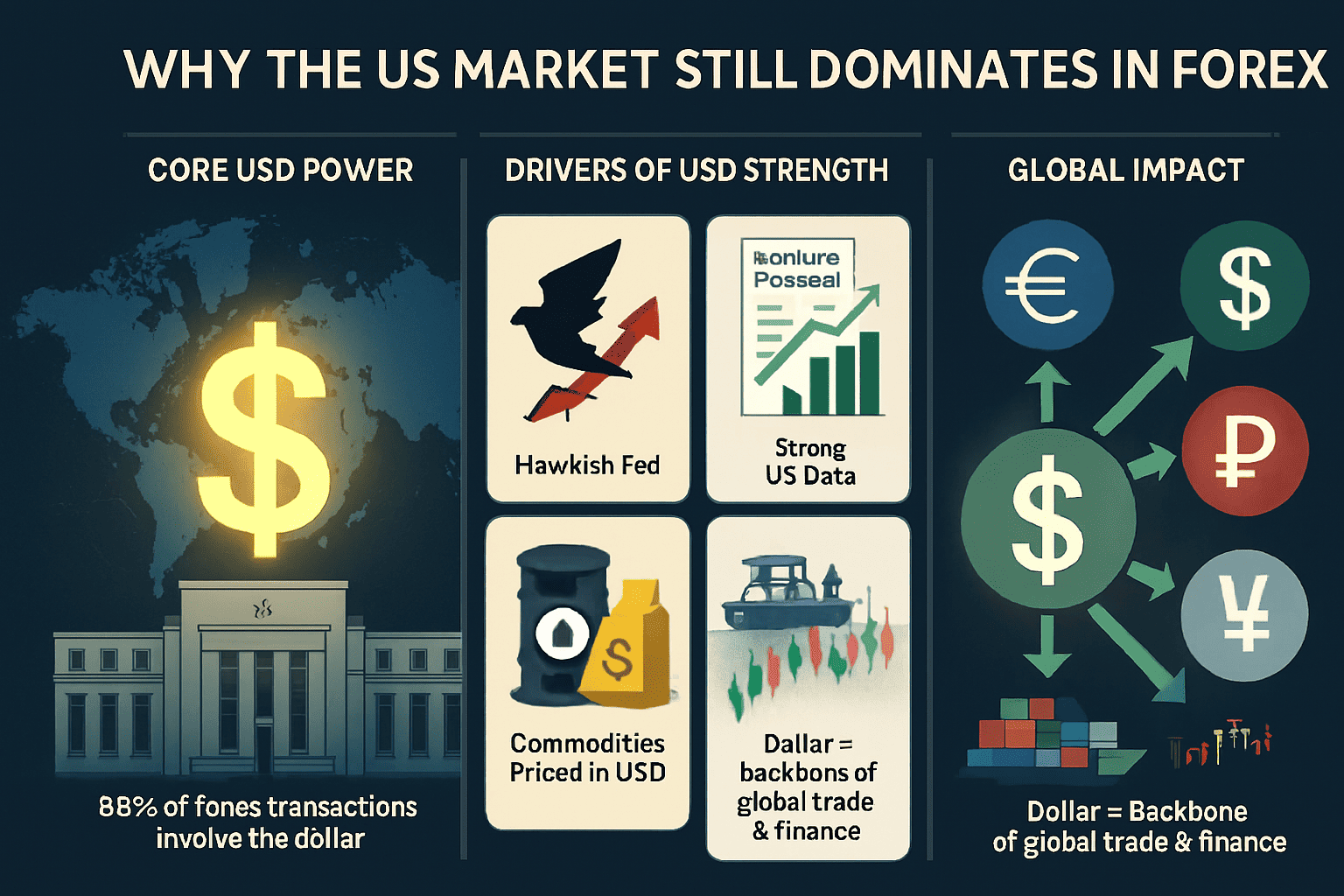
The US dollar remains the world’s reserve currency, making it the backbone of international trade and global financial transactions. Roughly 88% of all forex transactions involve the dollar in some way. This means that US monetary policy, economic releases, and political decisions almost always ripple across every major pair.
For instance:
- A hawkish Federal Reserve stance typically strengthens the USD across the board.
- Strong US data (such as Nonfarm Payrolls or GDP) often drives safe-haven flows into the dollar.
- Global commodities like oil and gold are priced in USD, reinforcing its dominance.
The sheer scale of the US economy and its deep capital markets ensure that dollar movements remain the most important factor in forex trading.
The UK’s Unique Role in Forex
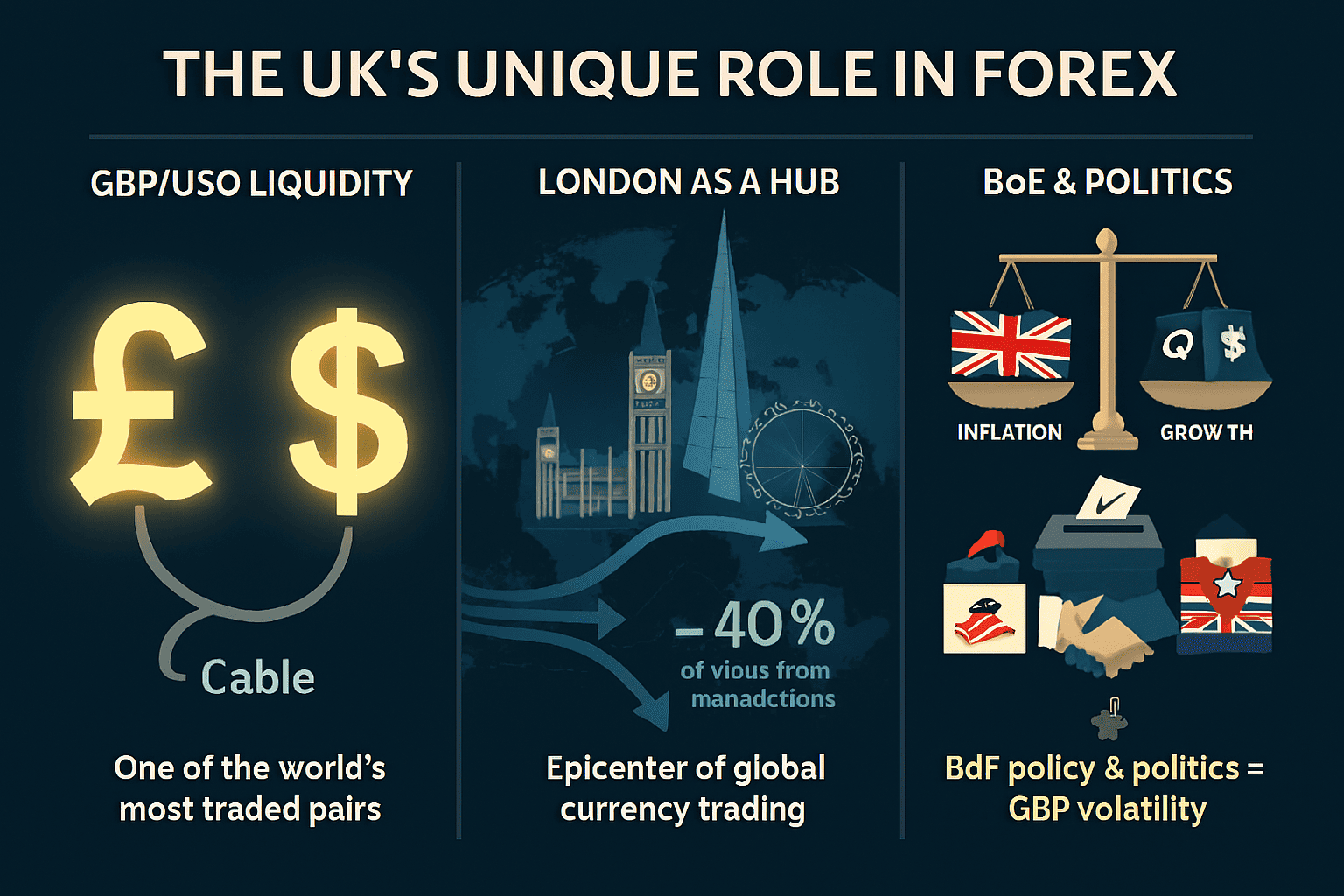
Despite being a smaller economy compared to the US, the UK still wields significant influence over the forex market for several reasons:
- GBP/USD Liquidity – Known as “Cable,” this pair is one of the most heavily traded in the world.
- London as a Financial Hub – Nearly 40% of daily forex transactions flow through London, making it the epicenter of global currency trading.
- Bank of England Policy – The BoE’s stance on inflation, interest rates, and growth often has an outsized effect on sterling volatility.
The UK’s political landscape also plays a role. Events like Brexit negotiations, elections, or trade talks often cause sharp moves in GBP-related pairs, sometimes independent of US influence.
Comparing UK vs US Influence on Major Pairs
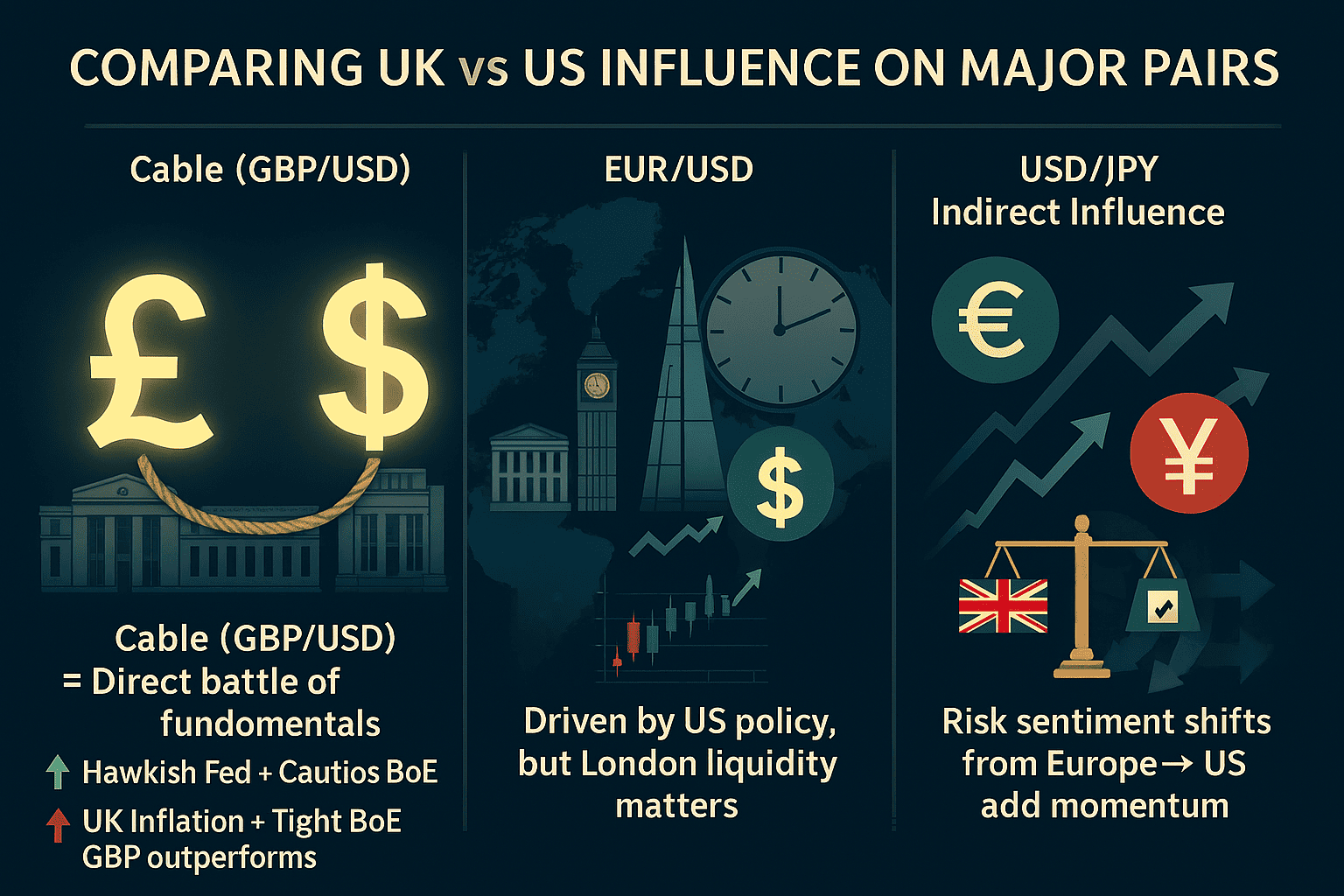
Let’s break down some key dynamics:
- GBP/USD (Cable): This pair directly reflects the tug-of-war between US and UK fundamentals. If the Fed is hawkish but the BoE remains cautious, GBP/USD usually falls. Conversely, if UK inflation pressures the BoE to tighten faster, sterling may outperform the dollar.
- EUR/USD: While primarily driven by US policy, UK market sentiment often plays a secondary role, especially during the London trading session when liquidity peaks.
- USD/JPY: Mostly dollar-driven, but GBP’s fluctuations can sometimes add indirect momentum as risk sentiment shifts between European and US hours.
The London–New York Overlap Factor
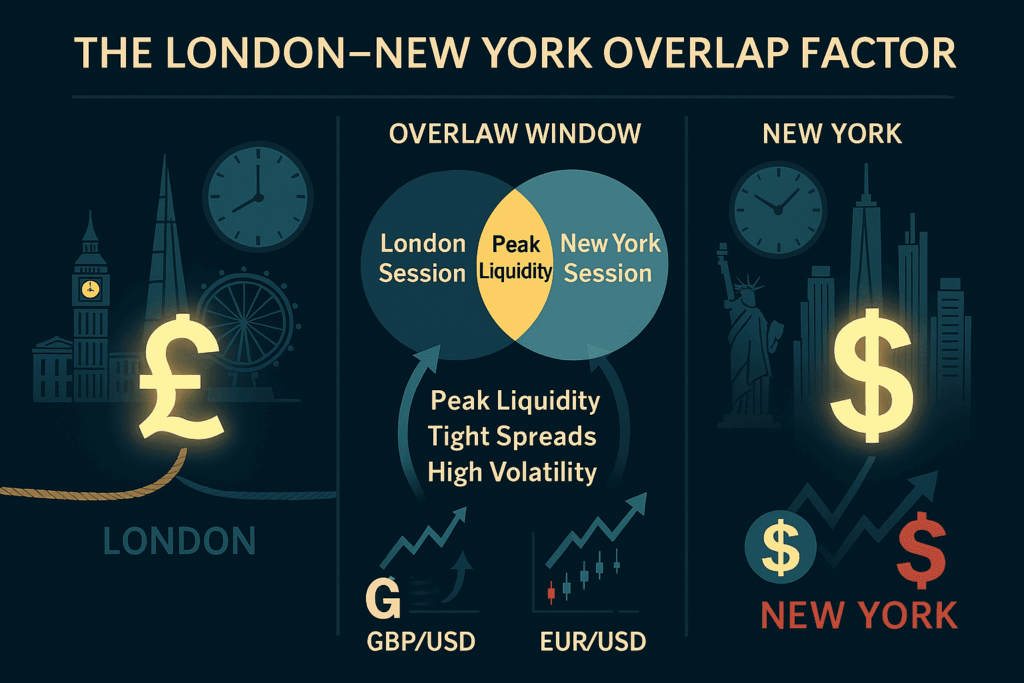
The London–New York trading session overlap is where both regions’ influence is felt most strongly. During these hours, liquidity peaks, spreads tighten, and volatility spikes. Key data releases from either the US or UK during this period can trigger whipsaw movements, making it a prime window for intraday traders.
Conclusion
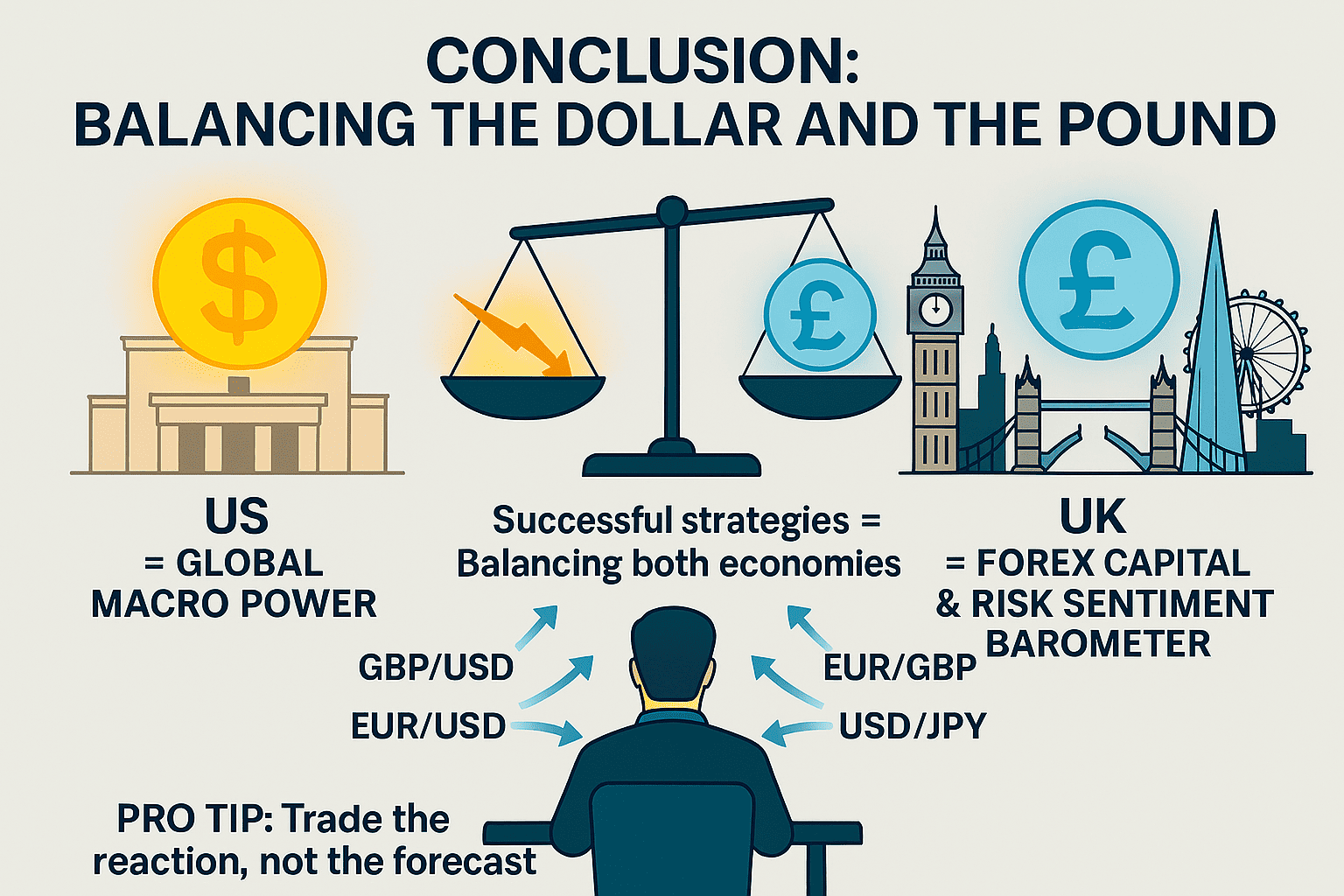
While the US remains the dominant force in driving global forex markets, the UK’s role is far from secondary. With London as the world’s forex capital and the pound often acting as a barometer of European risk sentiment, traders must weigh both economies when analyzing major pairs.
Ultimately, successful forex strategies require balancing the macro power of the dollar with the sensitivity of the pound to local and regional developments.